





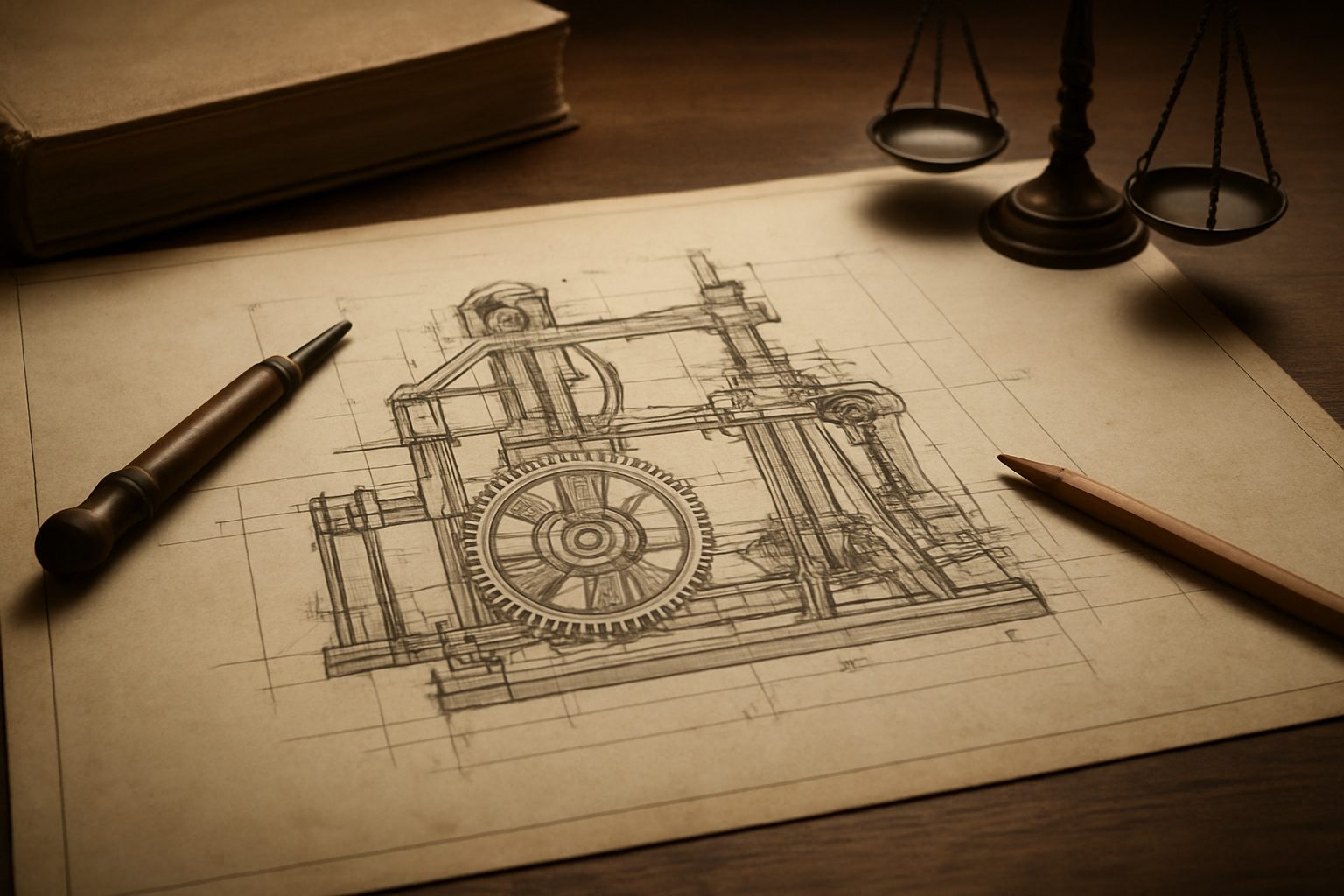
Many inventors underestimate the importance of patent drawings. The USPTO requires drawings whenever they are necessary to understand the invention. Inadequate or missing drawings can result in objections that delay your application for months.
Drawing requirements to keep in mind:
All drawing figures must be referenced in the specification
Line quality must meet specific USPTO standards
Multiple views are often required to fully disclose a mechanical invention
A poorly prepared drawing set is one of the fastest ways to generate an unnecessary Office Action, adding time and cost to your filing.
What “Obviousness” Really Means—and Why It Trips Up Inventors
Section 103 rejections—based on obviousness—are among the most common patent rejections issued by the USPTO. An invention is obvious if someone skilled in the relevant field could have arrived at it by combining existing prior art references.
How to strengthen your application against obviousness rejections:
Clearly articulate what problem your invention solves and why existing solutions fall short
Document unexpected results or advantages where possible
Avoid designs that are simple combinations of well-known components without a novel twist
Colorado inventors in fields like clean energy and aerospace—both major industries along the Front Range—often face heightened scrutiny here, given the dense concentration of existing patents in those sectors.
About Patent Rejections
What is a non-final Office Action?
A non-final Office Action is the USPTO’s first formal rejection of your application. It outlines the examiner’s objections and rejections. You typically have three months to respond, with extensions available for a fee.
Can rejected claims be rewritten and resubmitted?
Yes. Responding to an Office Action often involves amending claim language, adding arguments, or both. A well-crafted response can overcome a rejection and move the application toward approval.
How long does the patent application process take in the U.S.?
On average, the USPTO takes 22 to 30 months to grant a utility patent from the filing date. Accelerated examination programs can reduce this timeline significantly for qualifying inventions.
Is a design patent easier to obtain than a utility patent?
Generally, yes. Design patents protect the ornamental appearance of a product and have a higher grant rate than utility patents. However, they offer narrower protection and are not always the right fit for functional inventions.
What should I do if I disagree with the patent examiner’s rejection?
You can file a response with legal arguments, request an interview with the examiner, or—if rejections persist—appeal to the Patent Trial and Appeal Board (PTAB).
Build a Stronger Application From the Start
Rejections are part of the patent process, but the right preparation minimizes them. From clear written descriptions to well-structured claims and thorough prior art research, every element of your application matters. Inventors across Colorado—from Denver’s tech corridor to Colorado Springs—benefit most when they treat the application as the legal document it truly is.